By Isabelle Bradberry
Isabelle Bradberry is a senior analyst at PPL.
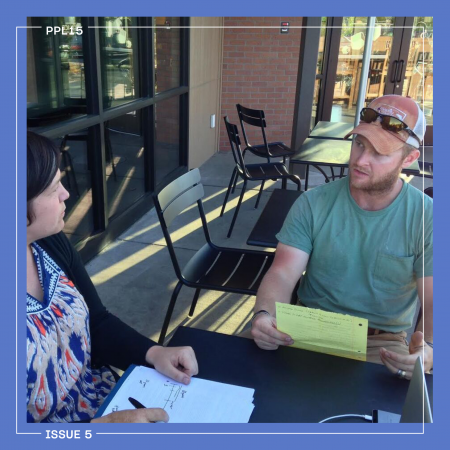
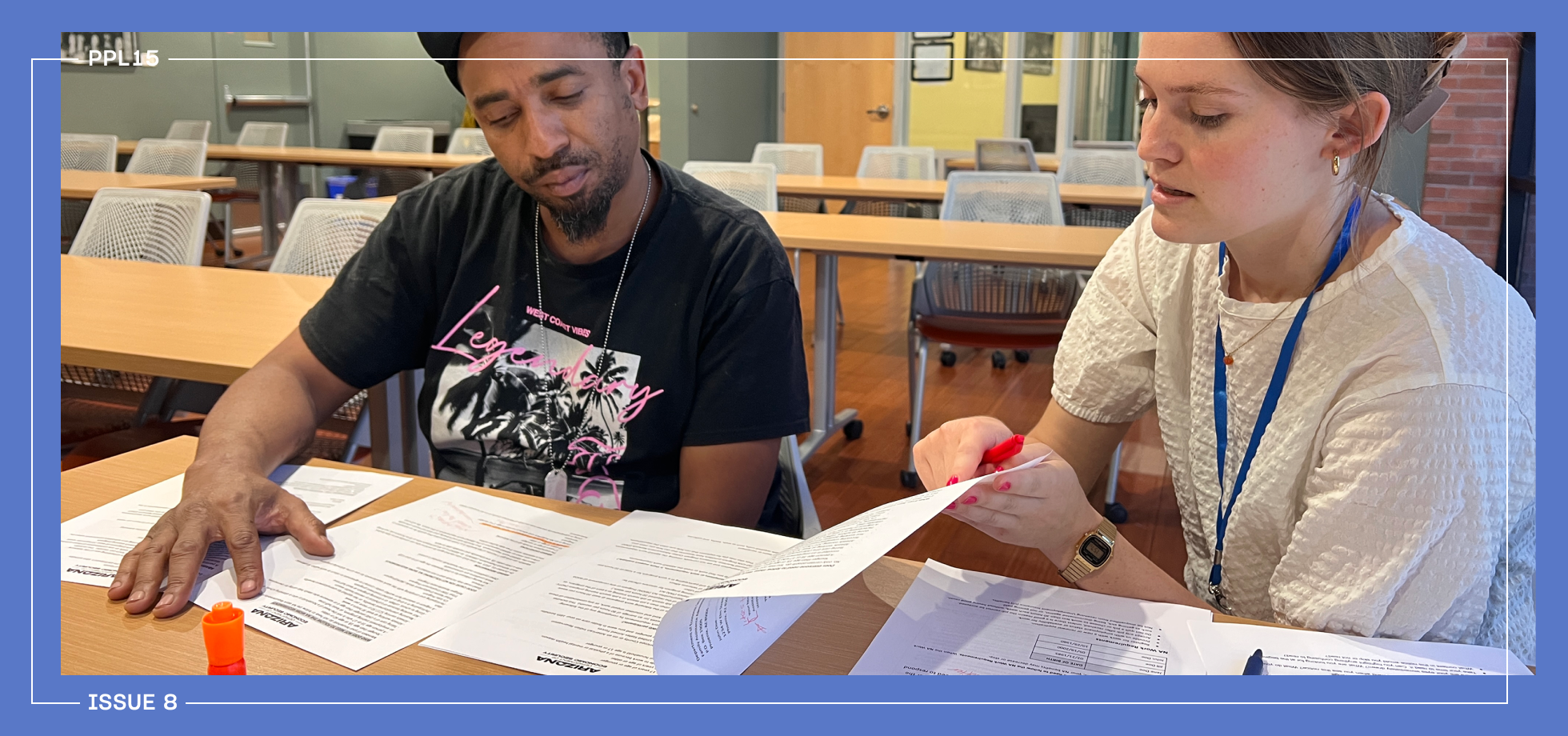
Turning off a desert road, my colleagues and I pulled into a parking lot where a line of cars snaked out of the entrance. It was November 2025, at a food bank in rural Arizona a few days after the federal government shutdown ended. Food bank staff hustled to and from cars with pantry goods, piling them into vans of families in need. We went from car-to-car asking, “Do you have SNAP benefits? Would you like to give us feedback on some benefits notices?” We were often met with wary stares.
This response was unsurprising. Those who were still enrolled in the Supplemental Nutrition Assistance Program (SNAP) had received their food assistance late that month because of the shutdown. Others had lost their benefits altogether after the 2025 passage of H.R. 1, also known as the One Big Beautiful Bill Act (OBBBA). Between our first visit to Arizona in June 2025 and our last in November, SNAP participation in the state had decreased by over 200,000 people.
Nine months earlier, our team at PPL had kicked off a project to redesign benefits notices for Arizona’s Department of Economic Security (DES). Notices are letters sent to people who receive public benefits, telling you if you’ve been approved or denied, and if the state needs more information from you, sometimes including forms. They’re often difficult to read, containing jargon and complex language that make it harder for people to understand their benefits. Our task was to redesign them to be clearer and more actionable.
In the grand scheme of government service innovation, designing a better benefit notice may seem trivial—but it’s fundamental to improving public services. Who among us hasn’t shaken a fist at the sky in frustration over a confusing government form? Unclear notices can lead to mistakes that affect a household’s benefits, calls that clog an agency’s call center, or families that give up on getting benefits altogether. When we began this project, that was our focus: using plain language and intuitive form design, we’d improve how people navigate these programs.
It seemed straightforward enough at the time.
In July 2025, five months into the project, President Trump signed OBBBA into law. The omnibus budget bill included new regulations for the SNAP program that narrowed eligibility, including disqualifying certain immigrant groups and expanding work requirements for previously-exempt populations.
One of OBBBA’s most significant provisions shifts program costs to states based on their payment error rate, which measures the accuracy of states’ eligibility and benefit determinations. States now face massive financial penalties—hundreds of millions of dollars—if their error rates are above six percent. With costs that high, states may no longer afford to keep their SNAP programs running at all.
It’s crucial to mention here that payment errors are not a measure of fraud. They are largely unintentional and can happen because of system backlogs, caseworker errors, or inadvertent client mistakes. But regardless of where the error comes from, states are on the hook if they don’t eliminate it, which can then lead to programs shutting down and people losing access to crucial benefits.
With the entire SNAP program under threat, it was clear the landscape we were working on had suddenly tilted on its axis.
Ultimately, we knew that our efforts to clarify notices could help states reduce payment error rates. To prevent errors, you need to make sure you’re getting accurate information from clients. Clients, in turn, need understandable and straightforward notices and forms. We decided to push forward and head back to Arizona.
We asked pilot participants to fill out forms to show us how they’d report income information. We checked their work, feeling satisfied when we found mistakes: “There’s some error! We found it!” After three more trips to Arizona, we started redesigning, ultimately delivering 133 SNAP notices and forms.
By then, our partners at DES were in full crisis management mode implementing OBBBA’s policies. For Arizona, like many other states, the financial penalties associated with failing to reduce their error rate posed an existential threat to the SNAP program itself. While our DES partners believed in the value of plain-language communications, their bandwidth to prioritize notice redesign was diminished compared to larger, quicker remedies against error rates. In the midst of this uphill battle, we weren’t sure if our work would get implemented.
The human impact of these policy changes soon became evident. By the time our project concluded in May of 2026, SNAP enrollment in Arizona had declined by more than half. More than 457,000 people, including nearly 196,000 children, lost food assistance as Arizona implemented OBBBA’s policies and increased verification requirements.
As designers in the public sector, we have the important and often devastating experience of witnessing policy impacts up close. During the government shutdown, research participants told us that the gift cards we provided as compensation were going toward feeding their children that month. We spoke with food bank staff who had been up since the crack of dawn, helping hungry families with few other options. We talked to people who had lost eligibility, who didn’t understand these policies, who struggled to meet work requirements—all of whom were scared.
There is so much grief here. It is felt in living rooms and kitchens across America, within state agencies, across the civic tech and policy innovation field that PPL works in. I feel it every time I read the statistics about the millions of people who have lost access to SNAP, the many more who will lose it soon, and I picture the people I met in Arizona receiving a single, devastating letter on their doorstep.
While the past year has been filled with conversations about numbers and error rates, this system is a fundamentally human one. It is our job to remember that. We’ve seen how policy impacts ultimately fall on the shoulders of everyday people trying to survive. When I set out to write this article, I didn’t have a smart, pithy takeaway about what that means for the field of public service design. Instead, I’m still wading in the grief of witnessing such a colossal loss of access. It’s possible, though, that this grief in itself is an important lesson.
Sarah Jaffe, a journalist who has written extensively about grief, said in an interview, “[Grief] is a common thing that we will all experience and therefore can be something that, if we figure out how to make the space for it, can bring us together and tie us together.” She posits that grief is not necessarily something you overcome, but something that can remind you of what’s at stake, galvanizing you toward building better systems.
Throughout this past year, I’ve been moved by all of the people and organizations who have banded together to try to fix this. The staff at state agencies, including our amazing partners at Arizona DES; the community-based organizations and food banks; and PPL’s peers, particularly those involved in the Safety Net Response Network, are all collaborating and working tirelessly to make outcomes better for everyday Americans. Shared grief became a catalyst for relationship-building, resource-sharing, and innovation.
As of now, the SNAP notices we designed haven’t been implemented yet in Arizona, but the agency plans to start rolling some out soon. In the meantime, we’re working to share and expand on our redesigned notices beyond Arizona—using our learnings to build an AI tool that can quickly draft SNAP notices, and creating adaptable form templates. It’s crucial for us to immediately make our findings useful to states across the country.
Despite the work we’ve done, we are still sitting in the uncertainty of what the SNAP landscape will look like next year. We don’t know whether what we do now will be enough to offset the program’s losses. But this grief we feel is a datapoint about how we don’t want the world to look. It tells us that the work must continue, despite seemingly insurmountable odds. Most importantly, it reminds us that centering people—engaging with those who our government serves, learning from them, and honoring their stories by pushing for change that improves their lives—remains our ultimate responsibility.
As the Public Policy Lab marks its 15th year, we’re publishing a series of essays reflecting on the projects that shaped us and what they’ve taught us about public-interest innovation. Each post is paired with a related conversation, bringing practitioners together to explore the theme and its implications for the future of public systems.
Isabelle Bradberry, “The Weight of Policy Change: Reflections from the Field in the Age of H.R. 1,” New York, NY: Public Policy Lab, September 11, 2026, https://www.publicpolicylab.org/resources/the-weight-of-policy-change
PPL is a tax-exempt 501(c)(3)
nonprofit organization.
info@publicpolicylab.org
+1 646 535 6535
20 Jay Street, Suite 203
Brooklyn, NY 11201
We'd love to hear more. Send us a note and we'll be in touch.
Enter your email below to subscribe to our occasional newsletter.
Wondering what you’ve missed?
Check out our
The Public Policy Lab is a tax-exempt
501(c)(3) nonprofit organization.
Donate now to support our work; your
gift is tax-deductible as allowed by law.