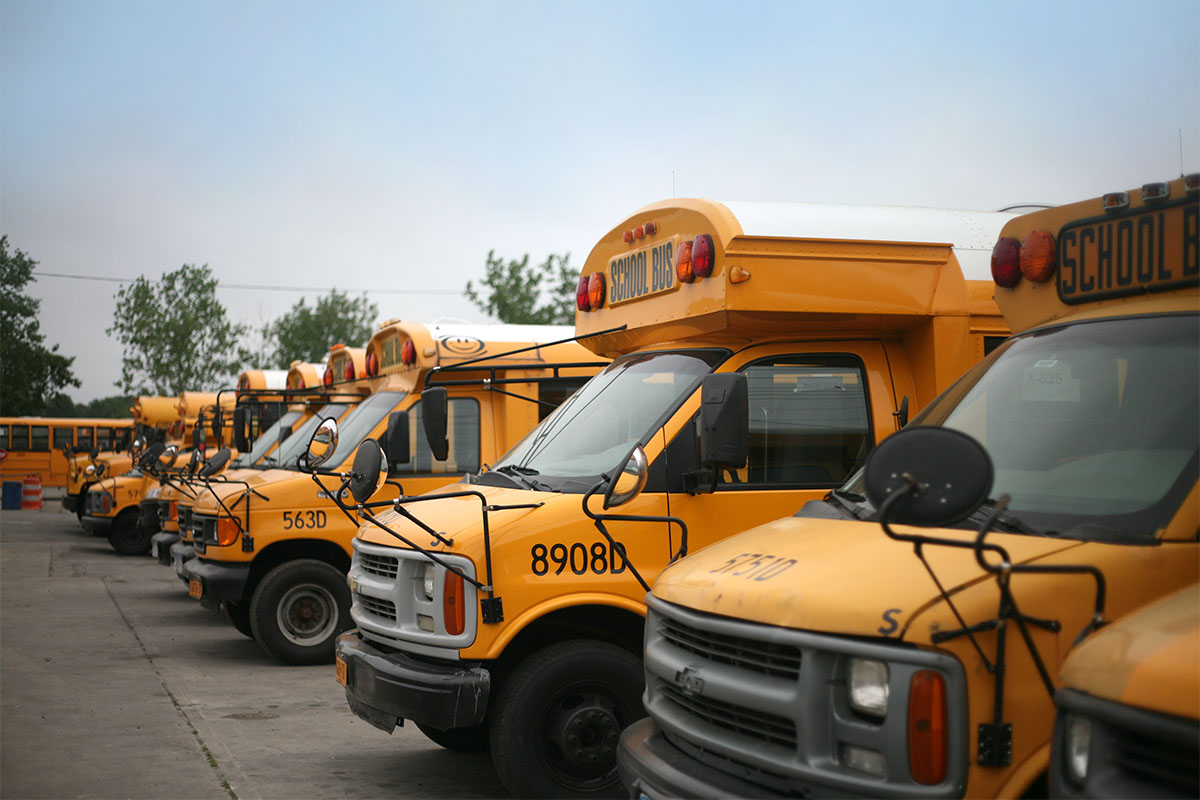
Over eight months, we collaborated with the NYC DOE to improve access to safe, reliable transportation for the more than 45,000 students with disabilities in NYC public schools. Through ethnographic research with families, school staff, and bus teams, we identified unmet needs and co-developed solutions.
The Outcome
Through collaborative design and prototyping with families and frontline staff, we produced three proposals to improve the busing system: tools to set expectations, share child-specific knowledge, and better communicate service changes.
Over eight months, we collaborated with the NYC DOE to improve access to safe, reliable transportation for the more than 45,000 students with disabilities in NYC public schools. Through ethnographic research with families, school staff, and bus teams, we identified unmet needs and co-developed solutions.
The Outcome
Through collaborative design and prototyping with families and frontline staff, we produced three proposals to improve the busing system: tools to set expectations, share child-specific knowledge, and better communicate service changes.
Project Background
In 2013, The New York City Department of Education (NYC DOE) Office of Innovation launched the Chancellor’s Challenge to provide an opportunity for DOE offices to identify an important opportunity for improvement and put it to a design challenge. The Division of Operations and the Division of Specialized Instruction and Student Support submitted the selected challenge area: the provision of door-to-door busing service for more than 45,000 students with disabilities.
We partnered with the DOE to conduct discovery and design work related to this topic over eight months ending in 2014. Together with the DOE, we collaborated with service providers and family members in ethnographic research activities. The project team identified unmet user needs and proposed project ideas, two of which were then developed through collaborative design and prototyping with family members and front-line staff. For more detailed information, read the full report here.
This work resulted in three proposals for improving the family and student experience of door-to-door busing provision:
Frame Family Expectations for Transportation Preempt potential problems by using the social-history meeting to set expectations around transportation provision. Initiate a collaborative decision-making process around transport needs using a family-friendly discussion tool.
Share Family Knowledge of Child with Bus Team Facilitate more tailored, child-centered care on the bus and mitigate against inevitable service changes. Use a tool to transfer families’ deep knowledge of their children to bus teams and better integrate family and team approaches.
Alert Families to Service Changes Expand outreach to families so they can prepare their children for service changes. Use a tool that aligns school staff, bus teams, and families to provide more written notice about a wider range of service changes.