Every year, thousands of Michiganders navigate the civil legal system without a lawyer. They’re trying to stay in their homes, manage debt, care for their families, or protect their rights, all through representing themselves in court. However, certain court forms that they need to fill out can be hard to understand. When that happens, their cases can be delayed or even dismissed.
The Michigan Justice for All (JFA) Commission, established in 2021, is leading a statewide initiative to modernize and standardize court forms as part of its broader vision for 100% access to justice in civil legal matters. With leadership from the State Court Administrative Office (SCAO), the State Bar of Michigan, and the Michigan State Bar Foundation, and with input from 30 commissioners across the legal and community sectors, JFA is coordinating a comprehensive reform effort.
With JFA and SCAO, PPL—along with the support of independent contractor Rachael Zuppke—led a human-centered design process to address the persistent challenges users face in understanding court procedures and how forms function within them. Although plain-language revisions had improved terminology, usability testing showed that more structural changes were needed. The goal was to create a reusable design system for paper and PDF forms, along with tools and materials to help form administrators implement these improvements at scale.
Participants engaged
Michigan communities
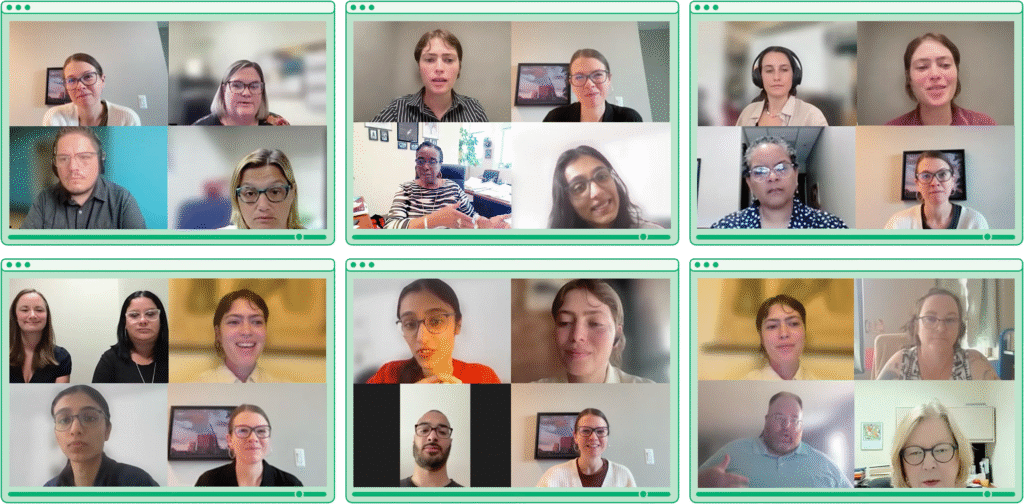
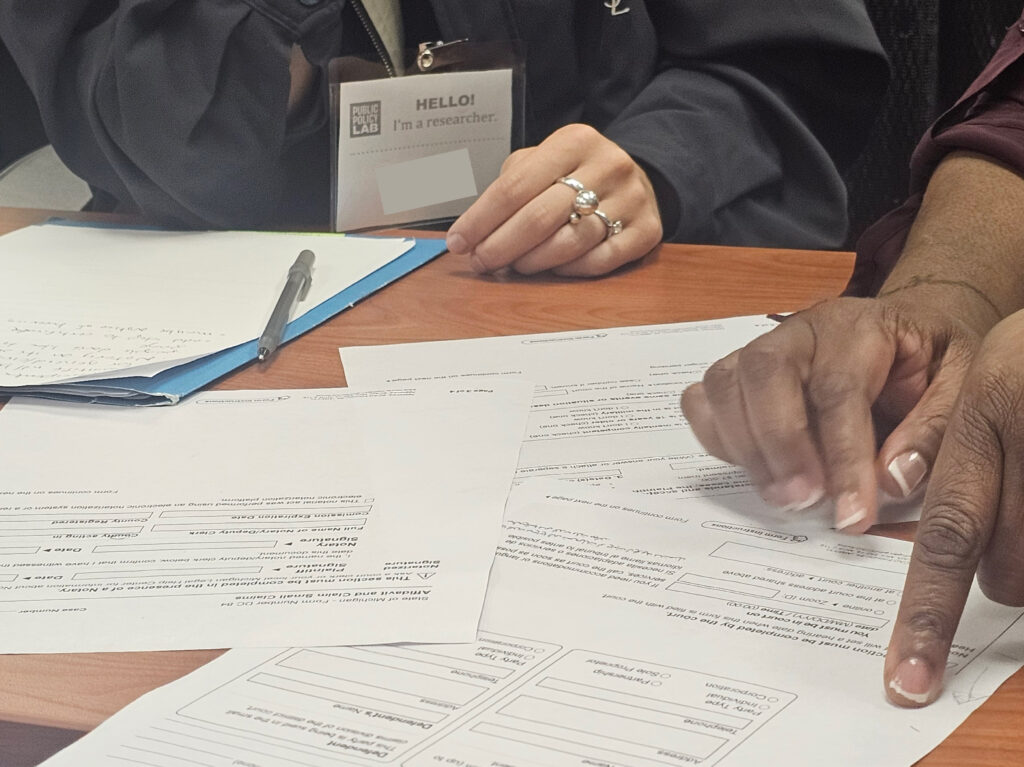
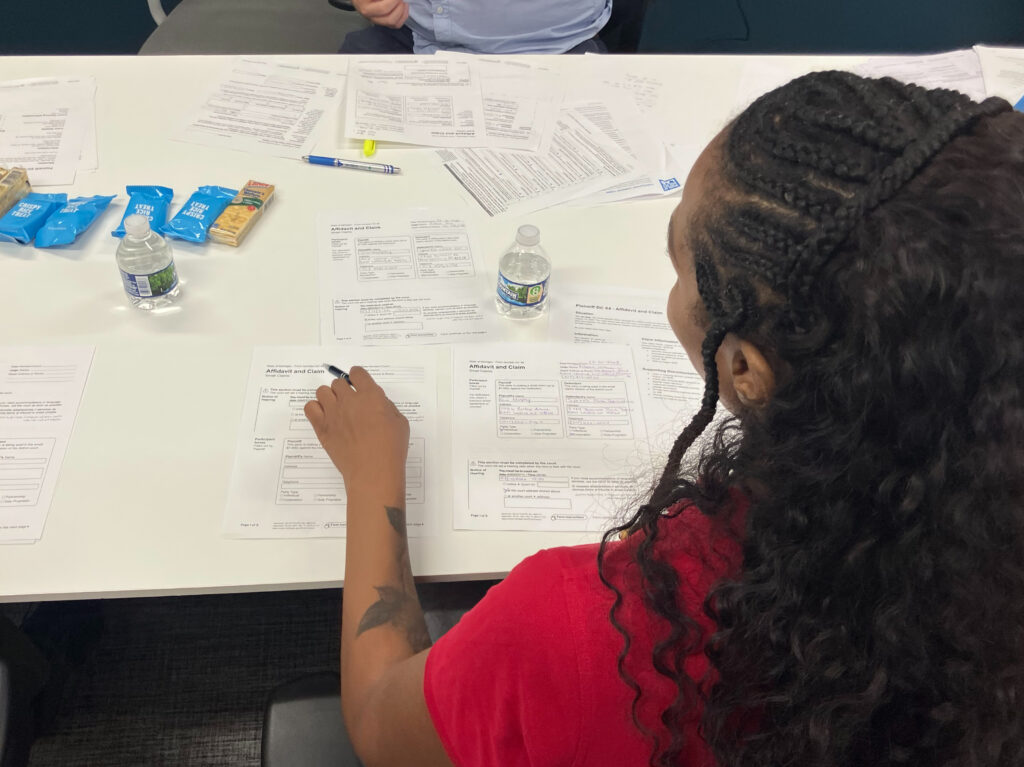
We engaged 47 participants in research and co-design, including frontline staff, Forms Unit staff, court clerks, judges, subject-matter experts, and members of the public from 13 communities across Michigan. With them, we explored three key questions.
What existing challenges do the current forms pose for users and court staff that a new design system could address?
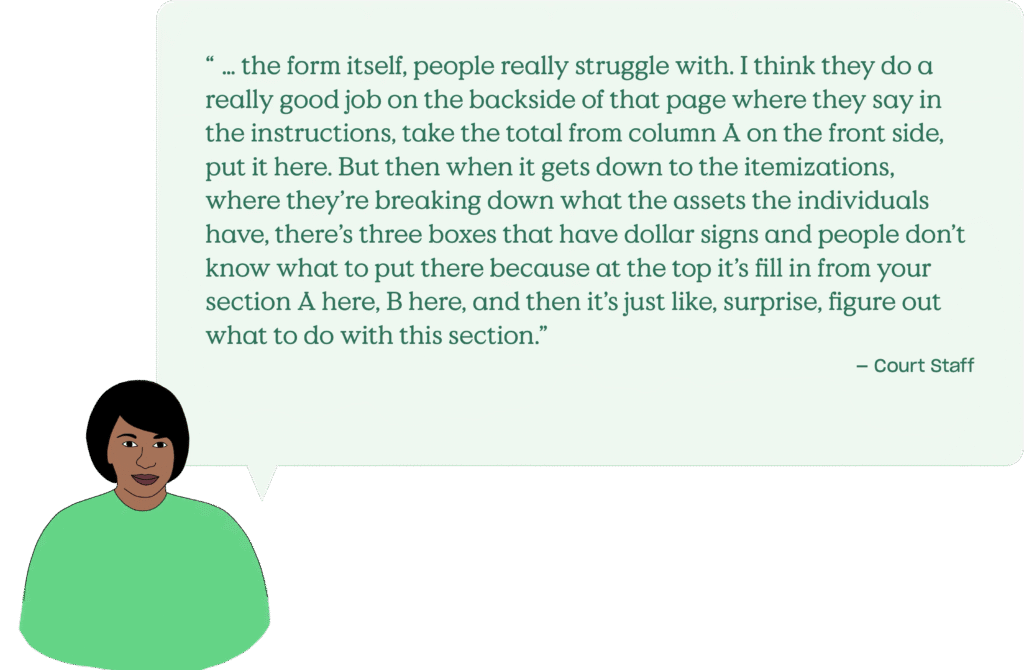
Court forms are used by many different people – people filing a case, people responding to one, court staff, and notaries. Because of this, forms often include information that doesn’t apply to everyone. This can make a form feel confusing or overwhelming.
People told us that:
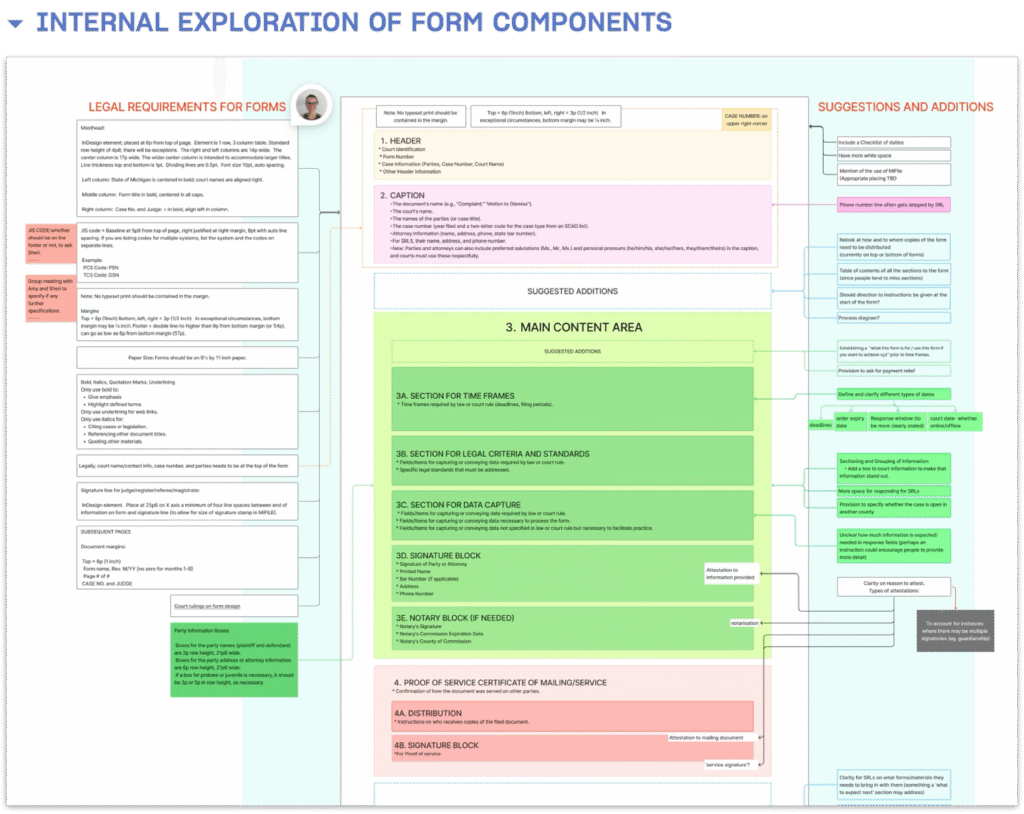
We conducted an audit of different forms to analyze their components.
What existing common elements appear on forms that can be standardized and improved?
We found that many forms use the same basic parts, but they aren’t designed the same way.
For example:
What do SCAO’s Form Unit staff need to implement the new design system?
Forms Unit staff told us they need tools that are:
Based on what we learned, we created a new design system for Michigan court forms that makes them clearer and easier to use for both the public and court staff. To create this system, PPL identified a set of proposed guiding principles based on what we learned in our research.
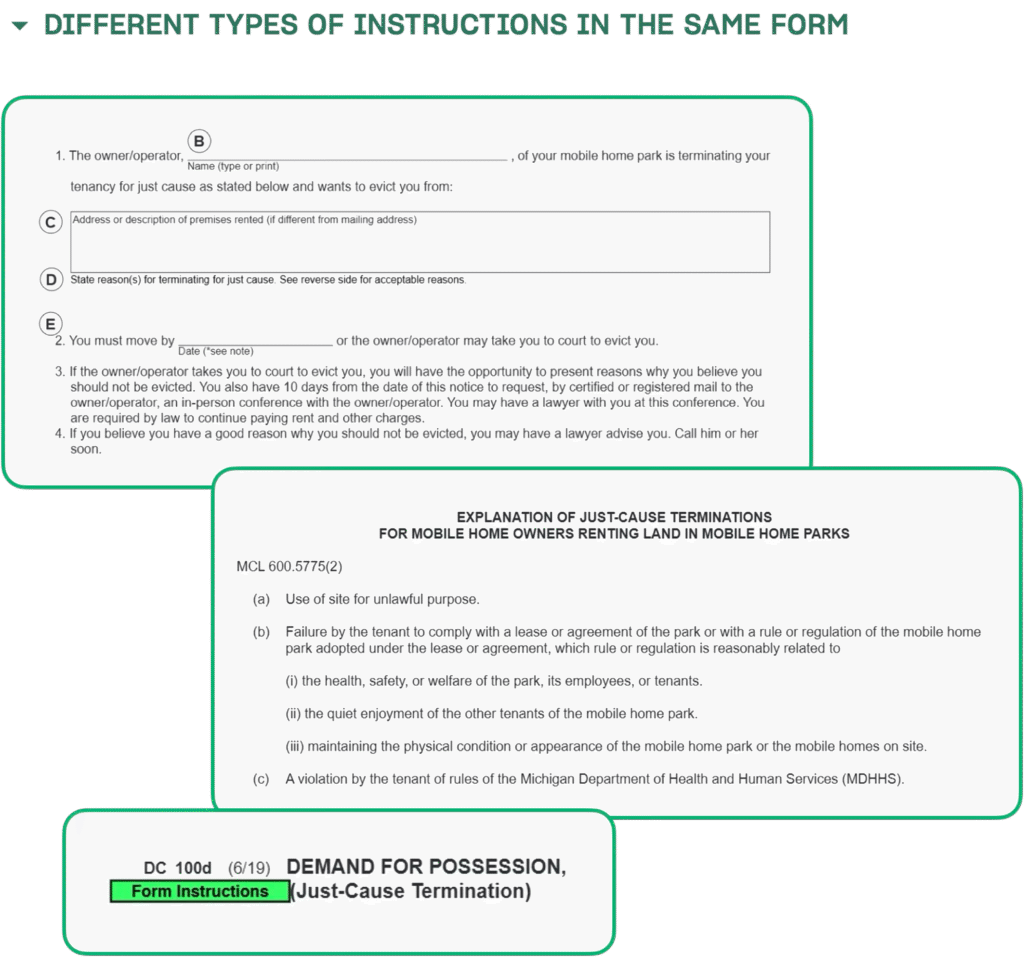
After assessing 1000+ Michigan court forms, we identified discrepancies in the way instructions were worded and stylized. These inconsistencies create confusion for the user.
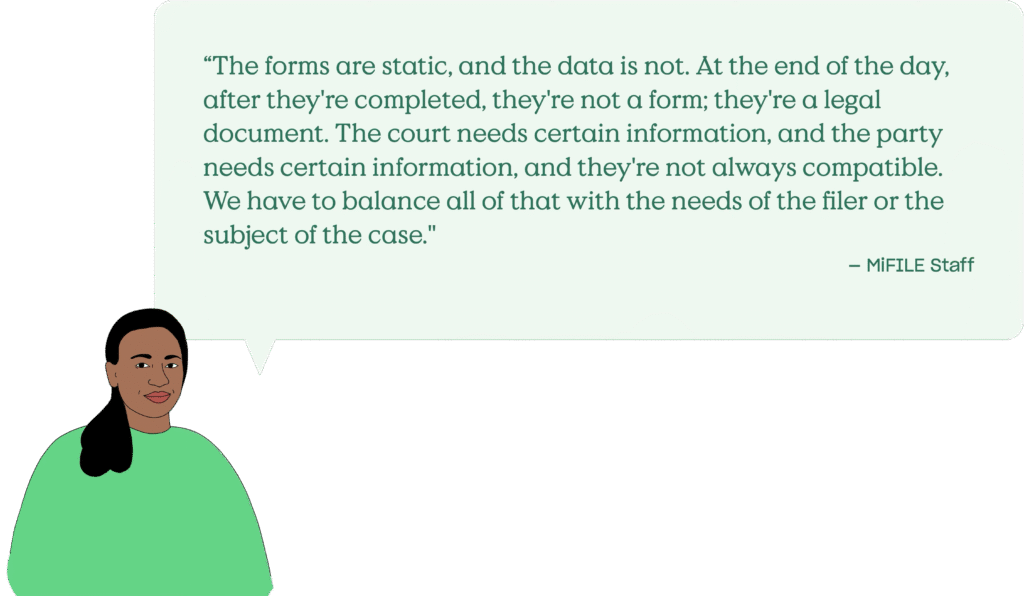
Using these principles, we developed a comprehensive, scalable design system that directly addresses the usability and operational challenges identified through research and co-design. The system reduces cognitive burden by introducing a unified visual structure grounded in consistent grids, predictable component placement, and plain-language explanations that clarify each section’s purpose.
We consolidated and standardized all instructions and next steps, eliminating the fragmentation that previously confused filers and pulled clerks into interpretive roles. Contextual cues, such as “Completed by…”, provide labels for job roles, and section-level guidance ensures that users know exactly what information belongs where and why.
The system includes consistent components to resolve the inconsistencies across common form elements, such as:
To support the use of the system by the Forms Unit staff, we created supporting materials that enable sustainable, long-term use of the design system. These include
These tools ensure the system is adaptable to both print and digital formats, reduce the need for one-off design decisions, and equip SCAO staff with a scalable foundation for updating and maintaining Michigan’s full library of forms.
The forms unit is implementing the new design system beginning in early 2026. PPL is continuing to provide support, including finalizing workflow guidance and training.
PPL is a tax-exempt 501(c)(3)
nonprofit organization.
info@publicpolicylab.org
+1 646 535 6535
20 Jay Street, Suite 203
Brooklyn, NY 11201
We'd love to hear more. Send us a note and we'll be in touch.
We are accepting applications for a Graduate Summer Intern until February 23, 2026.
We're currently seeking applications for a Graduate Summer Intern. If interested, learn more about the role here.
To hear about future job announcements, follow us on Instagram, Twitter, Threads, and LinkedIn or subscribe to our newsletter.
Enter your email below to subscribe to our occasional newsletter.
Wondering what you’ve missed?
Check out our
The Public Policy Lab is a tax-exempt
501(c)(3) nonprofit organization.
Donate now to support our work; your
gift is tax-deductible as allowed by law.