Projects

Supporting Small-Business Accessibility in New York City

How can we increase accessibility compliance among small businesses in New York City?

Partners & Funders

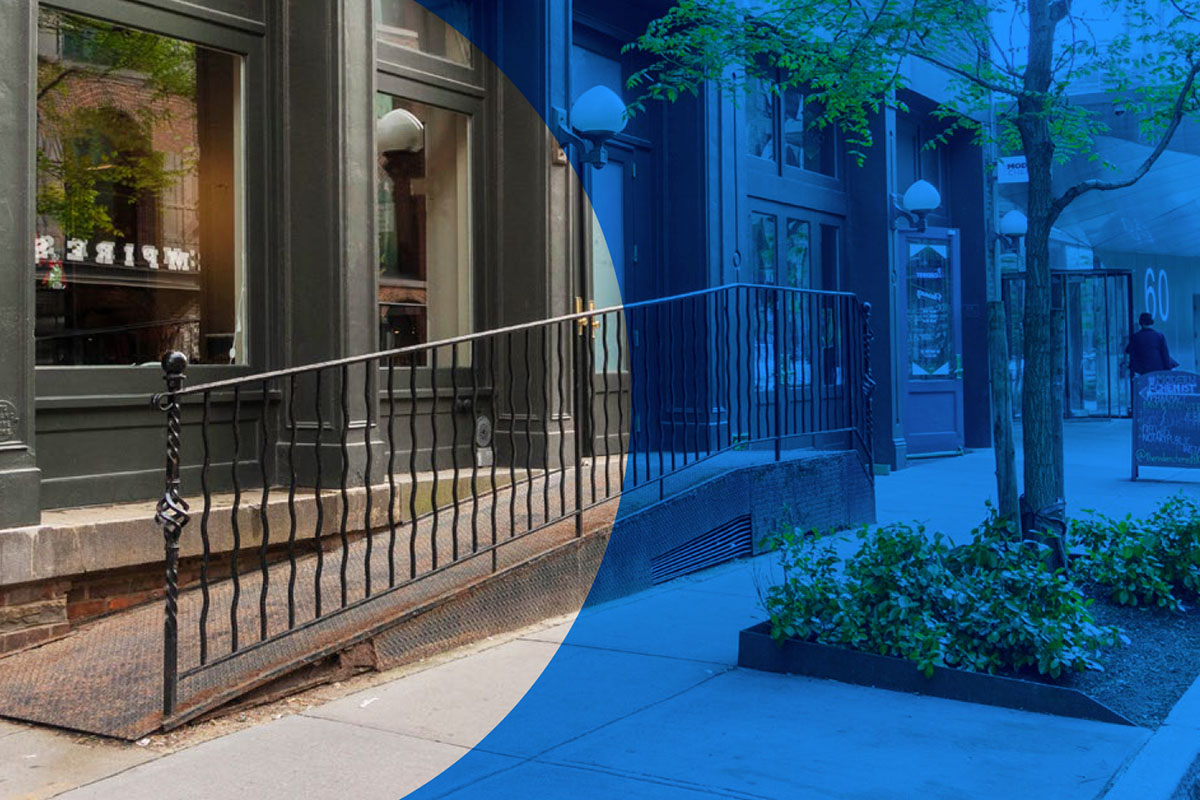
A storefront along a city sidewalk

The Project

Small businesses need better awareness and support to comply with local, state, and federal accessibility regulations. For the NYC Department of Small Business Services and the NYC BID Association, PPL conducted research to support better understanding and compliance with accessibility requirements.

The Outcome

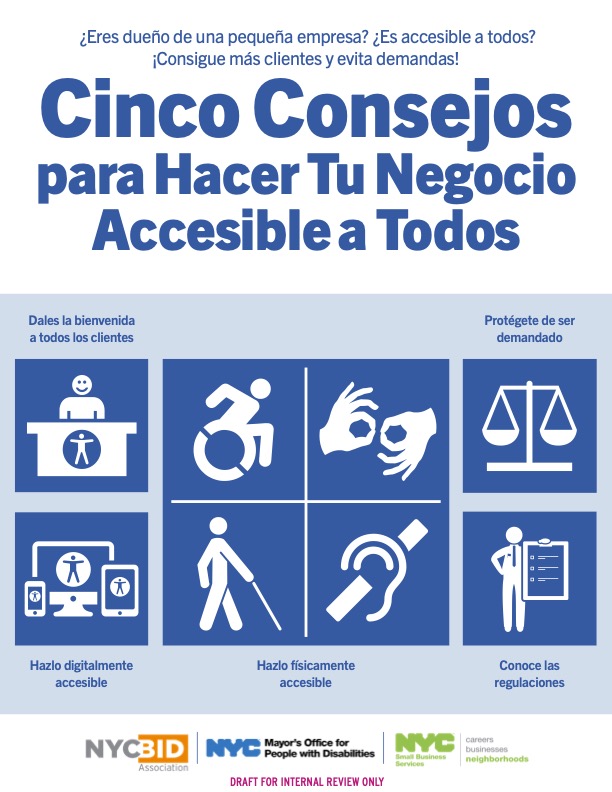
We developed new regulatory engagement and compliance tools and programs, including a website where businesses and BIDS can find resources on accessibility compliance, a set of printable outreach materials, and an outreach model for BIDs.

Supporting Small-Business Accessibility in New York City

A storefront along a city sidewalk
How can we increase accessibility compliance among small businesses in New York City?

Partners & Funders

The Project

Small businesses need better awareness and support to comply with local, state, and federal accessibility regulations. For the NYC Department of Small Business Services and the NYC BID Association, PPL conducted research to support better understanding and compliance with accessibility requirements.

The Outcome

We developed new regulatory engagement and compliance tools and programs, including a website where businesses and BIDS can find resources on accessibility compliance, a set of printable outreach materials, and an outreach model for BIDs.

Project Background

The Supporting Small-Business Accessibility in New York City initiative was the result of a collaboration between the NYC BID Association and the Public Policy Lab. In July 2018, the NYC Department of Small Business Services (SBS) awarded an Avenue NYC Organizational Development Grant to the BID Association and the Public Policy Lab to explore two policy issues affecting commercial corridors: small-business accessibility and transportation project coordination.

To tackle the former issue, the Public Policy Lab set the following goal: support project stakeholders in better understanding of and compliance with accessibility requirements, leading to fewer compliance penalties or issues for New York City businesses and increased access for all New Yorkers.

We conducted desk research on ADA issues as well as subject-matter expert (SME) research with BID Association leadership, the Mayor’s Office for People with Disabilities, SBS, U.S. Attorney’s Office, and other government stakeholders. We also conducted community-based qualitative research with three BIDs—Chinatown Partnership, Park Slope Fifth Avenue, and Bronx HUB/Third Avenue. Using our research learnings, we delivered the following:

  1. New regulatory engagement and compliance tools and programs, including a website where businesses and BIDS can find resources on accessibility compliance
  2. A set of printable outreach materials, including briefing documents that provide key information on BIDs’ and DOT’s mission, structure, processes, contacts, and resources
  3. An outreach model for BIDs to help staff in raising awareness about accessibility compliance and available support for business owners
  4. Policy recommendations for the NYC BID Association to pursue with various city and federal agencies

What We Found

Through both desk research and qualitative research into the broader accessibility compliance landscape as well as the problems specific to the districts in our study, we highlighted four key findings:

Key Findings

-Uncoordinated Regulatory Landscape: Federal, state, and city accessibility regulations operate independently, so small business owners who have complied with NYC accessibility regulations perfectly are still vulnerable to a federal lawsuit.

–Predatory ADA Lawsuit Industry: Small business owners are being sued—often multiple times—in drive-by, boilerplate lawsuits that have been hitting city neighborhoods in waves. Small business owners are usually advised to settle their suits, and most do, paying thousands of dollars in fees.

–Limited Awareness and Action Among Business Owners: Small business owners are not aware of accessibility issues until they or someone they know are sued. Even after they are aware of the issues, small business owners do not comply, because of the costs (real or perceived), limited time, and process confusion.

–Inconsistent Responsibilities Between Property Owners and Business Owners: New York City leases do not consistently assign responsibility for accessibility compliance between property owners and business owners. Small business owners and property owners may both be sued; they may then sue each other.
0

Small Business Owners Interviewed

0

BIDs Visited

0

Working Sessions with SMEs

What We Designed

We used these key issues to brainstorm ideas with a group of BID and SBS staff during a research pin-up and co-design session. These ideas ranged from policy recommendations to specific outreach materials that could be created. Following the session, the team developed prototypes of the top ideas, which included:

  1. Website: We created a website for this project that included information and resources on accessibility compliance for new and current business owners. BID staff could also find resources for reaching out to business owners, including a model outreach plan, templates, and flyers.
  2.  Outreach Model & Templates: These materials helped BID staff structure their outreach to business owners about accessibility compliance. The model outlined a concentrated three-month outreach campaign. BIDs can run the outreach campaign once a year or multiple times a year, depending on their capacity and needs.
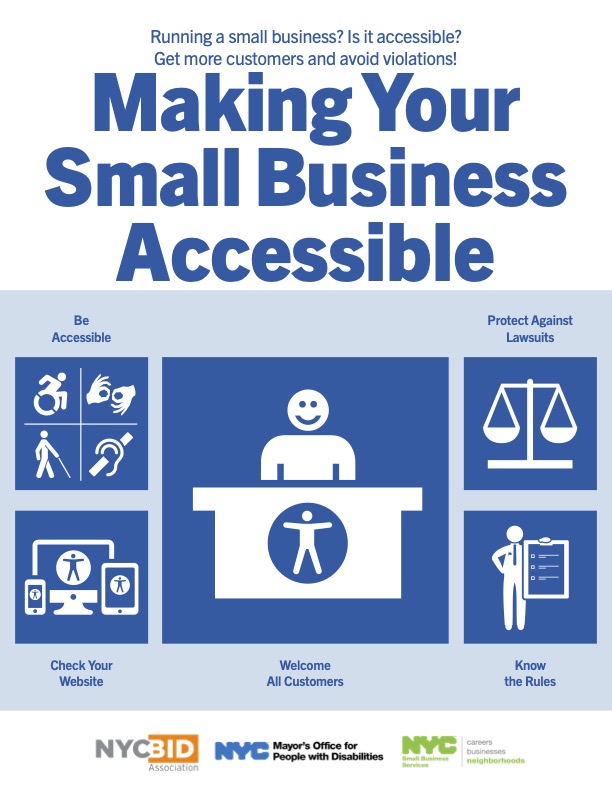
  3. Outreach Flyers: These flyers were printable PDFs which included basic tips and resources on accessibility compliance. The three outreach flyers were geared towards three groups: new business owners, existing business owners, and existing business owners facing an ADA lawsuit. 

We also delivered the following policy recommendations for the NYC BID Association to pursue, along with actionable next steps. These recommendations were ranked by their value to business owners, ease of implementation, and political feasibility:

  1. Mandate Standard ADA Disclosures and Clauses in Commercial Leases: To ensure that all business and property owners are clear about their accessibility responsibilities, property owners could be required by the City to include the following information in their leases: 1) whether a certified ADA specialist has inspected the property, 2) any known accessibility violations, and 3) who is responsible for making and paying for accessibility improvements.
  2. Expand SBS Compliance Advisor Program to Strengthen ADA Consultations: SBS offers free, on-site compliance consultations to help small business owners comply with key City rules and regulations, but SBS is not equipped to provide detailed assistance with ADA. MOPD’s ADA expertise can be leveraged, either by providing ADA compliance advisors or training existing SBS compliance advisors.
  3. Provide Legal Support for Compliant Small Business Owners: Small business owners who are compliant with New York City’s accessibility laws can still be hit by ADA lawsuits. A citywide legal defense fund could help business owners who have complied with City rules fight predatory ADA lawsuits without taking on debilitating legal fees, and a legal center could provide resources on ADA and file lawsuits against predatory law firms.
  4. Lobby for ADA Legislation that Benefits Businesses and Improves Accessibility: The BID Association can collaborate with the New York State Congressional Delegation to lobby for various bills in Congress that protect business owners from lawsuits and support their ability to make accessibility improvements to their properties.
  5. Get New York City’s Building Code Certified as ADA Compliant by the Department of Justice: The NYC Department of Buildings (DOB) can request certification from the DOJ that New York City’s building code and other accessibility laws meet ADA requirements. Once the City’s code is certified, compliant small business owners can submit evidence that they have complied with local requirements if they are ever sued.

What We Implemented

Following our research and co-design sessions, we field-tested the above outreach materials with two participating BIDs over four weeks. BID staff sent out the  materials over email and social media channels and conducted door-to-door outreach with business owners. During the field test, we collected detailed feedback from business owners and BID staff and further refined the materials.

We conducted a final prototype review session with SBS, the BID Association, and MOPD to validate and finalize the policy recommendations, outreach materials, outreach model, and accessibility compliance website.


Outcomes

In November 2019, MOPD, SBS, the BID Association, and Public Policy Lab announced the launch of Empowering Accessibility—a fully online resource that would enable New York City small business owners to more easily understand their legal obligations in order to ensure compliance with accessibility standards.

The digital platform, intended for use by all business owners, included information on the benefits of making a business accessible, physical and digital accessibility standards, the risks of accessibility lawsuits, and additional resources.

Read the full press release here.

Get in Touch

Interested in partnering with us?

Join Us

Follow Along

Enter your email below to subscribe to our occasional newsletter.

Wondering what you’ve missed?


Check out our

Social Media

Donate

The Public Policy Lab is a tax-exempt

501(c)(3) nonprofit organization.