By Andrew Eickmann
Andrew Eickmann is currently a PPL senior principal. While leading strategic planning initiatives for the NYC Department of Housing Preservation and Development, he temporarily served as a PPL fellow. After a decade of public service in local government, Andrew returned to PPL in 2022 to lead innovation projects.
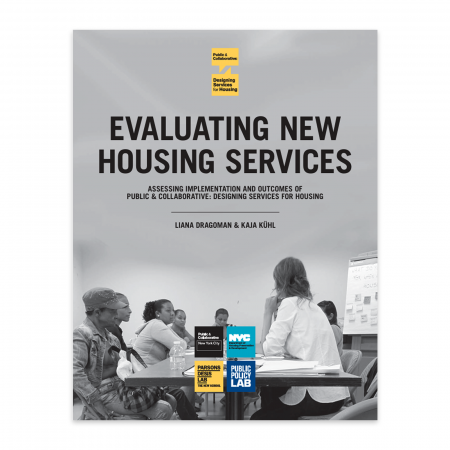
In 2012, my supervisor at the NYC Department of Housing Preservation and Development (HPD) asked me to lead an “innovation initiative” with the Public Policy Lab (PPL) and the DESIS Lab at Parsons. I wasn’t sure what this would entail, or even what PPL—a startup still in its infancy—was all about. “They’re designers,” she told me. “They help agencies rethink services. Just trust me—we’re going to learn a lot.”
A few months later, I found myself in a South Bronx computer lab watching residents navigate NYC Housing Connect, HPD’s online platform for the affordable housing lottery. We were testing prototype materials designed by PPL to help applicants prepare for the housing lottery. But our co-design participants kept raising deeper doubts: “They’re only showing me brand new apartments. I could never afford that!” Or, “I’ve tried applying before, but the interview process killed me. It’s just too complicated.”
What became clear to me was that New Yorkers didn’t just need better informational tools. They needed to believe that success in the housing lottery was possible, and that these apartments really had been built with them in mind.
Over the following months, the project team launched four lottery-improvement pilots. For one pilot, we created a set of informational tools that provided step-by-step instructions to apply for the lottery. These materials addressed a real need and were downloaded more than 350,000 times—yet fewer than half of applicants actually used them. Clear information alone was not enough.
The real barrier was trust. In a high-cost city like New York, there are far fewer available subsidized apartments than there are eligible residents in need. Securing housing through a city-run lottery requires a bit of irrational optimism and trust in an under-resourced system. And in communities with a long history of feeling misled by government officials, that trust is rightfully scarce.
The pilot that ultimately had the greatest impact was the one initially considered too risky: PPL fellows proposed training community-based organizations as “Housing Ambassadors” to distribute HPD’s new tools and provide one-on-one application assistance in their communities. The idea was simple— building trust with applicants would require human relationships. HPD staff couldn’t offer individualized help to clients without risking the appearance of bias in a lottery process. Community partners, however, were already trusted neighbors and experienced housing counselors. They could provide information and the human connection residents needed while maintaining the integrity of the system.
Initially, HPD supervisors balked at the idea. What if Housing Ambassadors conveyed incorrect information? What if the program created an appearance of favoritism? And what about the workload of maintaining community partnerships? I remember one conversation with a senior supervisor as the pilots were set to launch: “We love the informational tools—they look great. But we’re going to pause on the Ambassadors pilot. I’m hearing a lot of concerns about risks to the agency.”
What overcame these concerns was an argument about the purpose of a pilot. We weren’t proposing an immediate citywide launch of the Ambassadors program, just a small, controlled experiment with four organizations that HPD already knew well. Scaling decisions would come later, guided by evidence from the pilot. This argument, coupled with a detailed implementation plan, began to sway the skeptics.
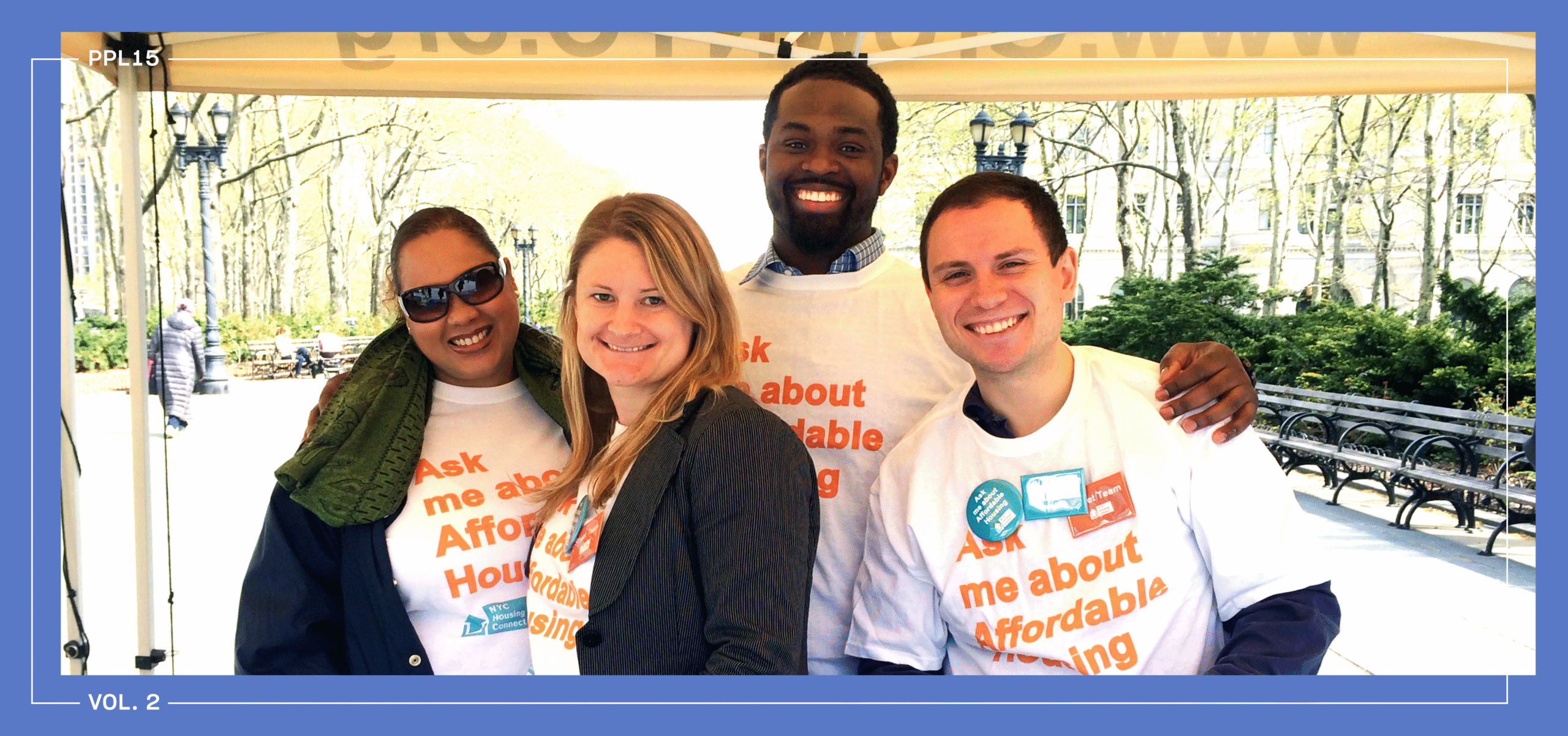
In the end, HPD took a leap of faith. In 2014, four community organizations became pilot Housing Ambassadors, the human bridge between the agency and housing applicants. One of those four original organizations, Churches United for Fair Housing (CUFFH), offered housing counseling in English and Spanish at its office in Bushwick, Brooklyn. CUFFH staffers hosted regular affordable housing workshops and used HPD’s new informational materials to help neighbors understand and navigate the lottery application process. As Ambassadors, they reviewed clients’ housing applications and required documents, and also shared resources for financial empowerment, credit repair, and legal support. Importantly, they provided clients encouragement rooted in real success stories.
The role of community-based Ambassadors wasn’t just technical support; it was relational. They made the housing system feel accessible and trustworthy. They were neighbors and fellow residents, but with HPD’s training, materials, and backing. Our informational tools provided clarity, but the Ambassadors provided trust—the ingredient that made residents willing to engage in the first place.
Twelve years later, the Housing Ambassadors network has grown from four pilot organizations to more than 50 sites operating across all five boroughs, with all original partners still involved. Expanding the network required HPD to evolve too. The agency added dedicated staff to coordinate the Ambassadors in a role that looks more like community organizing than traditional government compliance. And throughout, HPD maintained its willingness to trust external partners to help deliver essential services.
* * *
“The primary resource required for implementing this proposal is human.” — Designing Services for Housing, p.58
At the start of this project, my HPD supervisor encouraged me to take a leap of faith: “Just trust me—we’re going to learn a lot.” When I reflect on the work now, I see two lessons that still inform how I think about public sector innovation.
First, effective service delivery is inherently human. Digital tools and clear information do matter, but they rarely succeed on their own—especially in systems marked by scarcity and historical distrust. People need encouragement, reassurance, and relationships to navigate complex services.
Second, creating those human connections requires agencies to take calculated risks. Public institutions are structured to minimize failure, which often leads to protecting the status quo even when it isn’t working. Many promising new approaches don’t stall because they lack impact; they stall because agencies struggle to sustain the risk and trust they require. Yet small, controlled experiments can actually reduce long-term risk. They let agencies test new approaches, build evidence, and expand reach through partnerships that multiply capacity beyond city staff.
The humans behind government services—not just the frontline providers delivering the service, but also the agency managers making strategic decisions—determine whether innovations succeed. The Ambassadors program succeeded because HPD was willing to trust partners and invest in relationships it didn’t fully control. That decision made it possible to embed human connection into a complex public service and ultimately to deliver better information and outcomes for residents.
Innovation in government isn’t just about new materials. The tools provide information. The agency takes the risk. And human relationships turn services into something residents can believe in.
As the Public Policy Lab marks its 15th year, we’re publishing a series of essays reflecting on the projects that shaped us and what they’ve taught us about public-interest innovation. Each post is paired with a related conversation, bringing practitioners together to explore the theme and its implications for the future of public systems.
PPL is a tax-exempt 501(c)(3)
nonprofit organization.
info@publicpolicylab.org
+1 646 535 6535
20 Jay Street, Suite 203
Brooklyn, NY 11201
We'd love to hear more. Send us a note and we'll be in touch.
We are accepting applications for a Graduate Summer Intern until February 23, 2026.
To hear about future job announcements, follow us on Instagram, Twitter, Threads, and LinkedIn or subscribe to our newsletter.
Enter your email below to subscribe to our occasional newsletter.
Wondering what you’ve missed?
Check out our
The Public Policy Lab is a tax-exempt
501(c)(3) nonprofit organization.
Donate now to support our work; your
gift is tax-deductible as allowed by law.